I always give a gentle sigh when the calendar flips over to a new year, never sure what it will bring and what crazy weather we will have to contend with. Having said that, I am generally quite optimistic and look forward to watching the plants emerge and of course warmer weather.
Every day, no matter the weather I spend some time in the garden, admittedly if its raining or the ground is frozen the trip outside is generally to the greenhouse or potting shed. I love the sound of the rain on the glass, especially when I am grasping a hot brew and checking over the tender and half hardy plants that are taking shelter in the greenhouse.
I never seem to have time to spring clean the potting shed or indeed service my lawnmower so its an ideal job to get on with when it is too wet outside. The key is to get well wrapped up and for me a little light music in the background replaces the normal birdsong I hear when working in the garden.
It’s not always gloomy outside and although the garden may seem to be asleep there are lots of jobs to do so make the most of the dry days and try to get in front before the the weeds and the slugs start again.
Pruning fruit trees, especially apples and pears may seem a little tricky but once you have developed a little understanding it is fairly straight forward. We do have a few standard fruit trees in our garden, but the majority are trained fruit, espaliers, cordons, step-overs and pillar. The established trained fruit trees are summer pruned whilst the standard trees are winter pruned, anytime between November and March. Fruit trees (trained or otherwise) respond differently to the time of year you prune, summer pruning encourages the tree to produce fruiting spurs. whilst winter pruning tends to encourage more shoot growth. If you have what most would call a normal apple tree then it is a good idea to carry out some pruning every winter, this is to control the shape and habit of the tree as left to its own devices it will just become a tangled congested mass of branches, producing small fruit that is more susceptible to pest and disease attack. The idea is to maintain a goblet shape, with an open centre to encourage good air flow, which in turn encourages better quality fruit and less risk of disease. The natural response of trees is to grow vigorously when hard pruned so doing a little careful pruning every year avoids the tree being shocked into producing lots of growth. If the tree is very old and you want to renew some of the main branches then you can carry out what is called regulated pruning which involves removing some of the older branches over a number of years by cutting them back to suitable younger branch. It is a technique that need a little care but there are some excellent articles on the web that explain in detail the process and objectives. If you have quite a lot of fruit trees and bushes and need more help then there is a brilliant specialist society, ‘The Northern Fruit Group’ who have a wealth of knowledge and are keen to promote fruit growing, they have also been known to help with the pruning of members trees.
I have always been keen to explore new ideas and techniques but there is no doubt it can be a little confusing, do you tidy up all of your garden in the winter or leave it completely alone until spring. My view is that you should do what suits you best and that will bring the most enjoyment. If you like everything neat and tidy thats fine, although it would be helpful to local wildlife and birds, to leave a small area where herbaceous plants that have seeded can be left for them to consume. I have developed a halfway house approach, cutting back plants that look straggly or have collapsed, leaving some of the more robust to give an interesting structure and subtle colour until the spring bulbs emerge. I also cut back any plants that have had plant supports, canes or frames, as these supports will need wiping down with a garden disinfectant such as ‘Citrox’ so that they are ready for next year, I guess it is more a tidy-ish approach rather than wholesale clearance. The only exception to this is where I am replanting an area, which I do to most of the herbaceous perennial areas every three or four years as they can become overcrowded resulting in a shabby display. Firstly I lay a plastic sheet out over the lawn next to the bed I am working on, then I carefully lift the plants using a fork and place them on the sheet. I label them so I know which is which, any bulbs such as allium’s are carefully lifted and placed in a crate or tray. Once the site is cleared I spread a 5cm (2 inch) layer of well rotted compost or manure over the surface and as I replant the compost is worked into the soil. It is also a good time to split overcrowded plants aiming to replant healthy clumps about 15 – 20 cm (6 – 8 ins) in diameter, then interplant any bulbs you have lifted. I will apply a general fertiliser in early spring, to set them on their way.
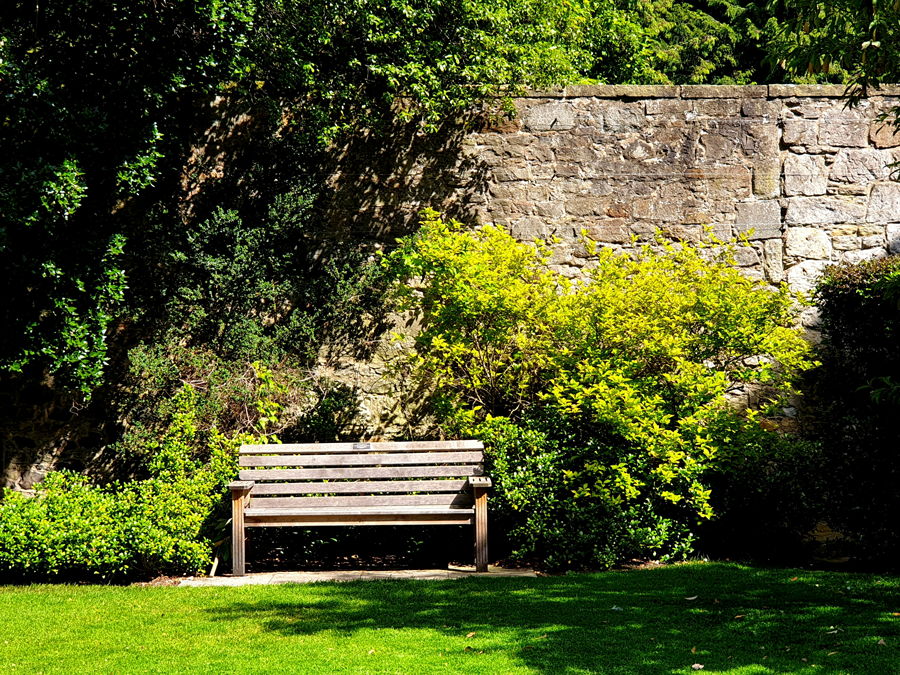
It is also a good time of year to check structures and garden furniture, repairing anything that is a little worse for wear. Check any trees that are tied to stakes, adjusting or replacing any that are tight or digging into the stem of the tree.
Happy Gardening,
Martin.
Next month, (renovating an overgrown hedge, be container ready, prune winter flowering shrubs.)